sat suite question viewer
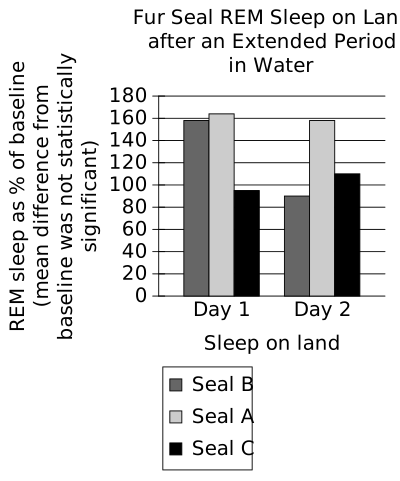
Research suggests that REM sleep in animals is homeostatically regulated: animals compensate for periods of REM sleep deprivation by increasing subsequent REM sleep. When on land, fur seals get enough REM sleep, but during the weeks they’re in the water, they get almost none. In a study of fur seals’ sleep habits, researchers recorded the REM sleep (as a percentage of baseline) of fur seals once they had returned to land. They concluded that REM sleep may not be homeostatically regulated in fur seals, citing as evidence the fact that the seals in the study blank
Which choice most effectively uses data from the graph to complete the text?
Explanation
Choice C is the best answer. If REM sleep were homeostatically regulated in fur seals, then all the seals would compensate with REM levels significantly over baseline after going weeks without REM. We’d also expect the seals to maintain those elevated REM levels for some time. Since seals B and C return very quickly to baseline REM levels, this suggests that REM sleep in fur seals may not be regulated homeostatically.
Choice A is incorrect. This doesn’t support the conclusion. If REM sleep were homeostatically regulated in fur seals, then we’d suspect the seals to sustain REM levels well above baseline for a prolonged period in order to compensate for weeks of REM deprivation while in the water. Whether or not there’s a reduction in REM sleep from day 1 to day 2 doesn’t tell us how REM sleep on those days relates to baseline, which is where our focus should be. Choice B is incorrect. The y-axis of this graph doesn’t depict baseline levels of REM sleep, but rather shows REM sleep as a percent of baseline. Choice D is incorrect. The graph doesn’t depict REM sleep while in the water for the seals in the study. Additionally, we’re told fur seals get no REM sleep while in the water, which is significantly different to the values shown in the graph for after they return to land.